For most of the last three decades, supply chain visibility meant one thing: knowing where your goods were, roughly, when someone bothered to check. A shipment left a factory in Guangzhou, and the next update came when it arrived at the port. Another arrived when it cleared customs. Another when it hit the distribution center. In between those checkpoints was a fog — a period of operational uncertainty that procurement and logistics teams learned to manage through buffer stock, safety lead times, and a high tolerance for ambiguity.
That model is breaking. Not slowly eroding — breaking. The combination of AI, IoT sensor proliferation, carrier API connectivity, and real-time data processing has fundamentally changed what visibility can mean. The question is no longer whether real-time visibility is technically possible. It is. The question is whether enterprises are architecting their operations to use it.
The Legacy Visibility Problem: Why EDI and Portal Tracking Failed
The dominant paradigm for supply chain visibility for the past 20 years has been built on two foundations: EDI (Electronic Data Interchange) messages and carrier/freight-forwarder portals. Both are structurally inadequate for modern logistics demands.
EDI was designed in an era when batch processing was the norm. An ASN (Advanced Ship Notice) message gets transmitted when a supplier ships, an 856 confirmation follows, and status updates trickle in at predetermined event milestones. The latency built into this system is not a bug — it was a feature for the hardware and bandwidth constraints of the 1990s. But it means that even a "well-instrumented" EDI-based supply chain is operating on data that is hours or days old.
Portal-based tracking is even more problematic. When a logistics manager has to log into eight different carrier portals, three freight-forwarder dashboards, and two customs broker systems to stitch together a picture of in-transit inventory, they are not operating with visibility — they are doing manual data aggregation. A study by Gartner in 2024 found that the average enterprise uses 14 distinct logistics platforms, and less than 30% have any meaningful data integration between them. The operational cost of this fragmentation — in analyst time, delayed decisions, and missed exception management — routinely exceeds $2 million annually for mid-market manufacturers.
The deeper failure is conceptual: legacy visibility systems are designed for reporting, not operations. They tell you what happened. They do not tell you what is about to happen, and they cannot tell you what to do about it.
Real-Time Data Integration: IoT, GPS, and Carrier APIs
The infrastructure for genuine real-time visibility now exists at scale. Three data streams, when properly integrated, can give logistics teams a continuous, accurate picture of goods in motion.
IoT sensors attached to pallets, containers, and individual SKUs now cost less than $8 per unit at volume and transmit GPS coordinates, temperature, humidity, shock, and tamper events via cellular or LoRaWAN networks every 15 to 30 minutes. For cold-chain logistics — pharmaceuticals, food, specialty chemicals — this telemetry is not a luxury but a compliance requirement in most regulated markets. Companies like Harrow Medical Logistics (a mid-sized pharmaceutical 3PL) have used continuous IoT telemetry to reduce cold-chain excursion claims by 67% and cut insurance premiums by $1.4 million annually.
Carrier API connectivity has matured dramatically. The largest carriers — FedEx, UPS, DHL, Maersk, MSC — now offer REST APIs with near-real-time shipment status. More importantly, platform aggregators like project44 and FourKites have built normalized API layers that connect to 1,400+ carriers globally, standardizing location and event data across modes. When an AI platform ingests this data stream, it can maintain a continuously updated position for every in-transit shipment without manual intervention.
The combination creates a data density that legacy systems simply cannot match. Where an EDI-based system might generate 6-8 status events for a transatlantic container shipment, a properly instrumented IoT-plus-carrier-API system generates 400-600 data points for the same journey. The difference is not just granularity — it is the ability to detect deviations while there is still time to respond.
Predictive ETAs vs. Static Tracking: The Core Operational Shift
Static tracking tells you where a shipment is. Predictive ETA tells you when it will arrive — and critically, whether that arrival is going to create a problem.
The distinction matters enormously in practice. A shipment that is currently at the port of Rotterdam, on schedule per its static status, may still be three days late if the vessel it's booked on has been rerouted around a weather system in the North Sea. A static tracking system has no way to surface that risk. A predictive ETA engine, trained on historical vessel routing data, port congestion patterns, customs clearance times, and current weather models, will flag the delay 48 hours before the static system would.
AI-based ETA prediction models typically combine three types of inputs: historical performance data for specific lanes, carriers, and ports; real-time event signals (vessel AIS data, port dwell time feeds, customs clearance rates); and external disruption signals (weather APIs, labor dispute databases, geopolitical risk feeds). When properly trained on 24-36 months of historical shipment data, these models achieve ETA prediction accuracy of ±8 hours for ocean freight at 85th percentile confidence — compared to carrier-provided ETAs that are accurate to ±24 hours at the same confidence level.
For Delmore Consumer Products, a $600 million CPG manufacturer with 340 active ocean freight lanes, implementing AI-based ETA prediction reduced their average "surprise delay" incidents — cases where a shipment arrived more than three days late without prior warning — from 23% to 4% of ocean shipments. The operational benefit cascaded across their supply chain: production schedulers could adjust line plans earlier, safety stock requirements dropped, and customer service escalations related to late shipments fell by 58%.
Exception-Based Management: From Monitoring to Action
One of the most underappreciated design problems in supply chain visibility is alert fatigue. When a system monitors 10,000 active shipments and generates an alert for every deviation, logistics managers receive hundreds of notifications daily — and learn to ignore them. The operational consequence is that genuine, high-impact exceptions get buried in noise.
AI-based exception management solves this through impact-weighted prioritization. Rather than alerting on every deviation from planned parameters, a well-designed system scores each exception by: the financial impact of the delay (based on shipment value, demand urgency, and customer commitments), the probability that the delay will propagate (i.e., whether downstream production or delivery is at risk), and whether there is an actionable response available (alternative routing, expedite options, substitute inventory).
The result is a daily exception queue that might contain 15-25 genuinely important events requiring human decision-making, rather than 400 low-signal alerts. Logistics teams shift from reactive monitoring to proactive exception management. They are not watching dashboards hoping nothing goes wrong; they are reviewing a curated set of decisions with recommendations attached.
This requires AI systems that understand business context, not just logistics data. An exception involving a shipment of promotional packaging for a retail launch campaign has a fundamentally different urgency profile than the same delay on replenishment stock for a product with two months of safety inventory. The former demands immediate escalation; the latter can be resolved at the next daily planning cycle. Systems that cannot distinguish between these are generating noise, not intelligence.
Control Tower Architecture: Centralizing the Intelligence Layer
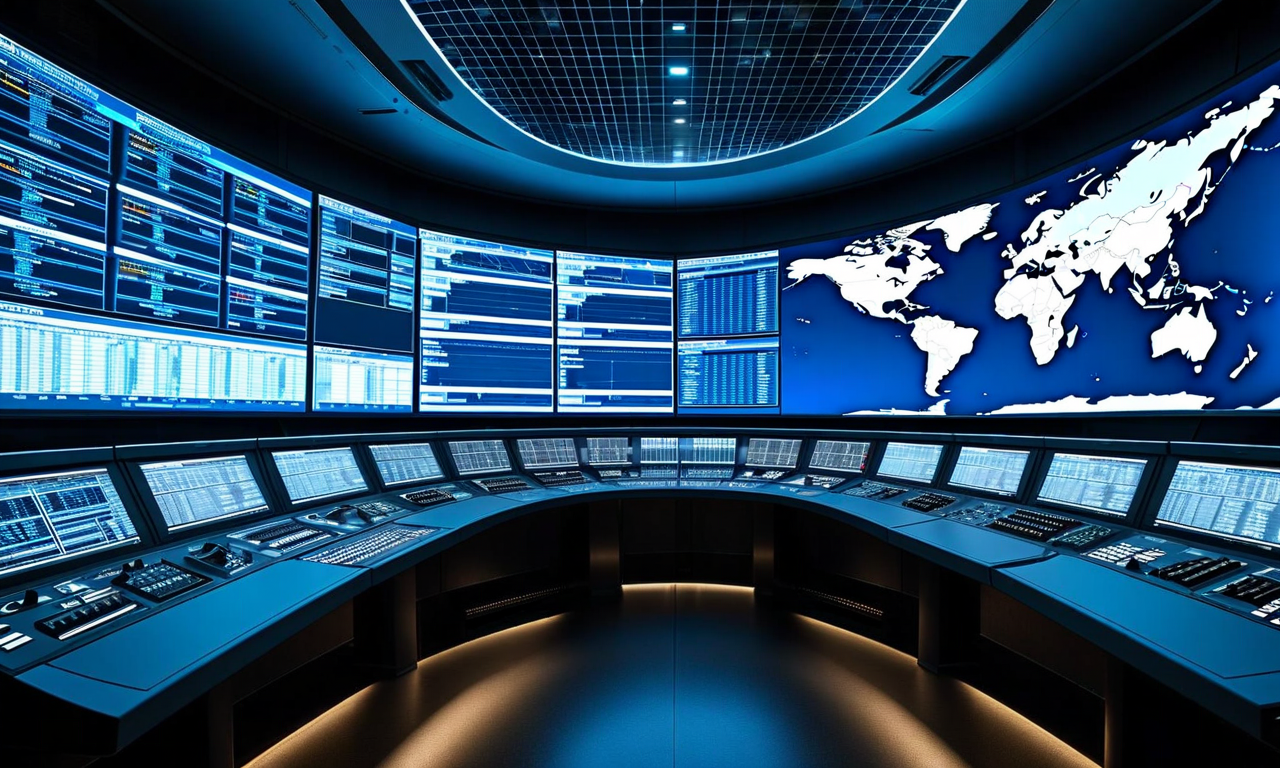
The most sophisticated enterprises are moving toward a supply chain control tower model — a centralized operational intelligence layer that aggregates data from all visibility sources, applies AI-based analytics, and surfaces decisions to the teams responsible for acting on them.
A mature control tower architecture has five functional layers. The data ingestion layer connects to all source systems: ERPs, TMS platforms, WMS, carrier APIs, supplier portals, IoT networks, and external data feeds. The normalization layer standardizes heterogeneous data into a unified shipment and inventory data model. The analytics layer runs continuous ETA prediction, exception scoring, and demand-supply matching. The decision support layer generates recommended actions with supporting rationale. And the workflow layer routes decisions to the right teams and tracks resolution.
The business case for this architecture is compelling. Companies that have implemented mature control tower capabilities report 15-25% reductions in freight spend (through better carrier utilization and reduced expediting), 20-35% reductions in safety stock (through improved visibility accuracy), and 40-60% reductions in the analyst time spent on manual tracking and escalation. For a $1 billion manufacturer with $80 million in annual logistics spend, those numbers translate to $12-20 million in measurable cost improvement.
Multi-Tier Visibility: The Unsolved Challenge
Most enterprise visibility investments focus on tier-1 suppliers and primary logistics partners. The harder — and more strategically important — problem is multi-tier visibility: understanding what is happening two, three, or four tiers deep in the supply chain.
The COVID-19 pandemic exposed this gap catastrophically. Automotive manufacturers discovered that their tier-2 and tier-3 semiconductor suppliers — companies they had never directly engaged with — were the linchpin of their entire production capacity. They had no visibility into those suppliers' production status, inventory levels, or capacity constraints until the shortage was already acute.
Building genuine multi-tier visibility requires a combination of supplier data sharing agreements, third-party supply chain mapping data (companies like Interos and Resilinc specialize in this), and AI-based inference from indirect signals. When a direct supplier's shipments begin to deviate from normal patterns, AI systems can flag this as a potential indicator of sub-tier disruption before a formal notification arrives. Importyron Industrial, a specialty chemicals distributor, used this approach to identify a developing capacity constraint at a tier-3 raw materials supplier 11 weeks before the shortage became acute — enough lead time to dual-source a critical input.
The infrastructure for multi-tier visibility is still maturing, and most enterprises are 2-3 years from full deployment. But the strategic imperative is clear: in a world where supply chains are global, complex, and fragile, visibility that stops at tier-1 is not visibility — it is a false sense of security.
Get Real-Time Supply Chain Visibility
Mandel AI provides end-to-end visibility across your logistics network with real-time tracking and predictive analytics.
Request a Demo