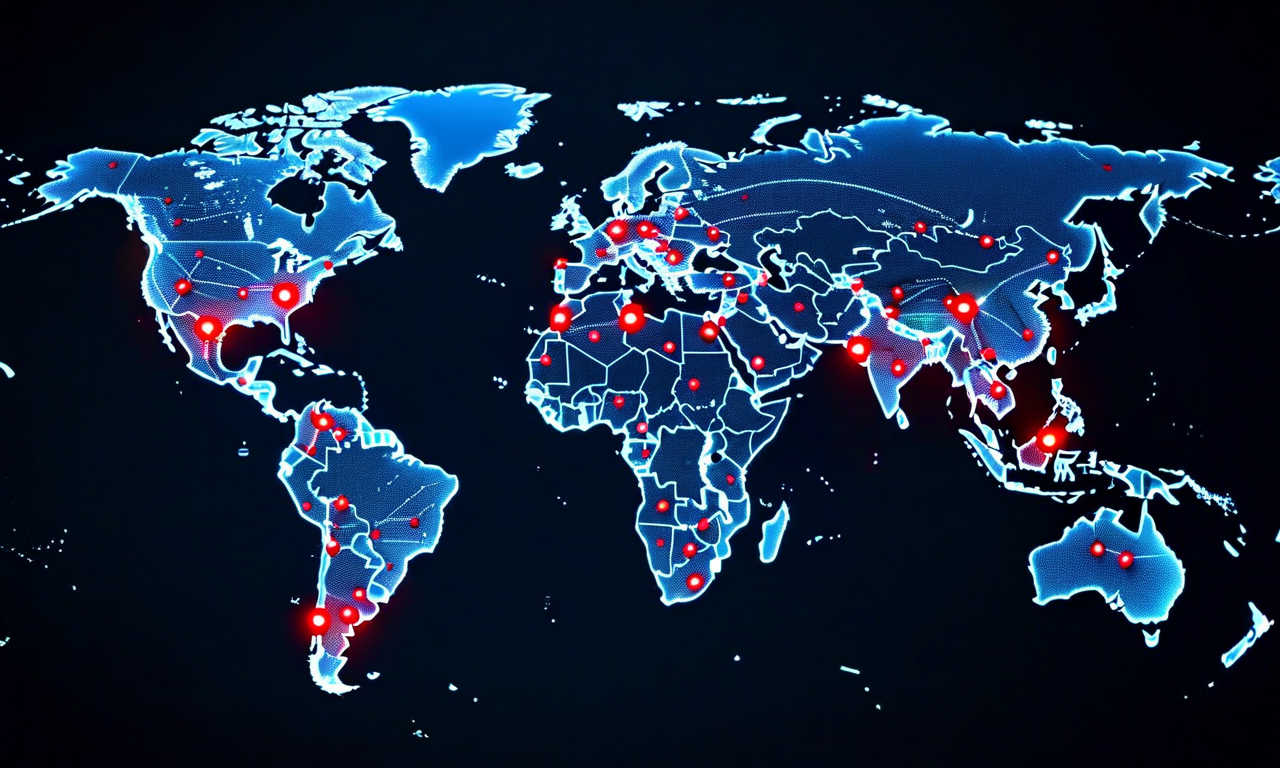
Supplier failures rarely look like failures until it's too late to do anything cost-effective about them. The signals are there beforehand — financial stress indicators, production capacity warnings, logistics constraints in a supplier's region, quality deviation trends — but they're spread across data sources that most procurement teams don't monitor continuously. AI closes that gap.
The business case for supplier risk monitoring is straightforward. A single critical supplier failure that triggers production stoppage costs most mid-market manufacturers between $500,000 and $3 million per incident when you add up expediting, production rescheduling, customer penalty clauses, and recovery procurement. Against that, comprehensive AI-driven risk monitoring costs a fraction. The math works clearly even at modest disruption frequencies.
The Limits of Traditional Supplier Management
Most supplier management programs rely on periodic reviews — annual or semi-annual assessments, quarterly scorecards, and ad-hoc performance meetings after problems surface. This approach has a structural weakness: it's inherently backward-looking. By the time a supplier's quarterly on-time delivery rate has deteriorated enough to trigger a formal review, the disruption has already happened multiple times.
The other limitation is scope. Enterprise procurement teams managing 500 – 2,000 direct suppliers typically have the bandwidth for deep engagement with their top 50 – 100 by spend. The rest receive minimal oversight. Yet disruptions don't only come from major suppliers — a critical single-source component from a small Tier 2 supplier can halt production just as effectively as a failure from a top-tier partner.
AI monitoring changes both constraints. Continuous monitoring doesn't require procurement analyst hours — it runs automatically, scanning supplier-related signals 24 hours a day across the full supply base. And it scales: the same system that monitors 50 suppliers can monitor 500 without proportional cost increase.
What AI Risk Systems Actually Monitor
Effective supplier risk AI integrates signals from multiple categories. Financial health monitoring tracks supplier credit scores, payment behavior, public financial filings, and news-derived signals about financial stress. A supplier that starts stretching payment terms with its own vendors, or that appears in news coverage related to financing difficulty, is showing early-stage risk signals that a periodic review would never catch.
Geographic and geopolitical monitoring tracks risks in the regions where suppliers operate — port congestion, weather events, labor disputes, political instability, energy availability, and trade policy changes. A supplier operating in a region experiencing electricity rationing will face production constraints that manifest in delivery performance before they appear in any supplier communication.
Operational performance monitoring goes beyond delivery KPIs to include quality deviation trends, lead time variance patterns, and production capacity utilization signals. A supplier consistently running at 95%+ capacity utilization has very little buffer to absorb unexpected demand increases or production disruptions — a risk that should influence how much safety stock is held for their components.
Tier 2 and Tier 3 visibility is where AI adds the most differentiated value. Most enterprises have no systematic monitoring of their sub-tier supply base. AI systems that can map and monitor extended supply chains — using combination of supplier disclosure data, logistics network analysis, and commodity-level supply mapping — give procurement teams visibility into risks that traditional management structures can't access.
Risk Scoring and Prioritization
Raw signal volume from supplier monitoring is large enough that surfacing everything as an alert would quickly become unmanageable noise. Effective AI systems aggregate signals into composite risk scores for each supplier, weighted by the criticality of what that supplier provides and the availability of alternatives. A risk score increase for a sole-source critical component supplier warrants immediate escalation. The same score change for a commodity supplier with five qualified alternatives warrants monitoring but not action.
This criticality weighting is what separates genuinely useful risk intelligence from surveillance theater. A food and beverage company that implemented AI supplier risk monitoring with criticality-weighted scoring found it reduced the alert volume requiring planner attention by 78% compared to raw signal monitoring — while still catching every event that ultimately required supply chain intervention in the following 12 months.
Lead Time as the Key Variable
The value of early warning depends entirely on what you can do with the lead time it creates. At 30 days' warning before a supplier disruption, an enterprise can qualify and onboard an alternate source, pre-build strategic inventory, or renegotiate delivery commitments with customers to manage expectations. At 5 days' warning, options narrow to expensive emergency procurement and damage control.
AI risk systems that alert teams to supplier stress signals when they first appear — rather than after they materialize in delivery performance — consistently demonstrate 15 – 30 day average lead time improvements compared to reactive monitoring approaches. A pharmaceutical company tracking active ingredients from suppliers across Southeast Asia found its average risk identification lead time went from 8 days (when a delivery miss triggered the alert) to 24 days after deploying AI monitoring — enough time to initiate alternate sourcing in most cases.
Resilience Through Supplier Network Design
Risk monitoring tells you when suppliers are at risk. Supplier network design determines how much exposure you have when they fail. AI-driven network analysis can identify concentration risks that aren't visible from traditional spend analysis — single sources for critical materials, geographic concentration of sourcing (multiple suppliers for the same component all located in the same region), and structural dependencies where a disruption in one supplier creates cascading effects through others.
A technology hardware manufacturer used AI network analysis to discover that three nominally independent PCB suppliers all sourced the same specialty substrate material from a single refinery. What appeared to be a diversified supply base had a hidden single-point-of-failure three tiers deep. Addressing that required qualifying a second substrate source — a project that would never have been initiated without the AI-driven visibility that revealed the dependency.
Integrating Risk into Procurement Decisions
Supplier risk intelligence only generates value if it influences actual decisions. The integration point that consistently delivers the most impact is sourcing and allocation decisions: when risk scores for a supplier rise above defined thresholds, the AI system triggers a procurement review with specific recommendations — whether to pre-build inventory, activate contingency sourcing, accelerate alternate supplier qualification, or adjust allocation percentages between primary and secondary sources.
Automating some of these responses further accelerates action. Pre-authorized safety stock build rules that activate when a critical supplier's risk score crosses a threshold can initiate inventory replenishment without waiting for planner review — appropriate for high-urgency, low-discretion decisions where speed matters more than human override.
Building the Data Foundation
Supplier risk AI requires a data foundation to work effectively. The minimum viable dataset is supplier master data (who they are, what they provide, their criticality to operations) combined with external data feeds for financial, geographic, and geopolitical signals. Performance data from your own procurement systems — delivery performance history, quality records, lead time actuals versus committed — adds the internal signal layer that makes composite risk scores far more accurate than external monitoring alone.
Most enterprises already have the internal data; the challenge is normalizing it and making it accessible to the risk system in real time rather than in batch exports. External data integration is typically handled through the AI platform's pre-built connectors to commercial risk data providers, news feeds, and logistics network data sources.
The organizations that get the most value from AI supplier risk management are those that treat the implementation as an ongoing capability rather than a one-time project. Models improve as they accumulate historical data on which signals actually predicted disruptions in that organization's specific supply network — making the system progressively more accurate and more useful over time.
Monitor Your Entire Supply Base
Mandel AI's supplier risk intelligence covers Tier 1 through Tier 3 suppliers with continuous monitoring and early warning alerts that give your team time to act.
Request a Demo